Please note: Some links on this page are affiliate links (including B&H and Adorama). This means I may earn a small commission if you purchase through those links—at no additional cost to you.
Midlife can be a stressful time. Career pressures, financial stress, family dynamics, regrets over past choices, and new challenges like caring for aging parents can all lead to feelings of unfulfillment and high anxiety.
Birding for balance to the rescue!
At a time in my life when all the aforementioned items—plus a few more—started weighing me down, I discovered birding.
The Post
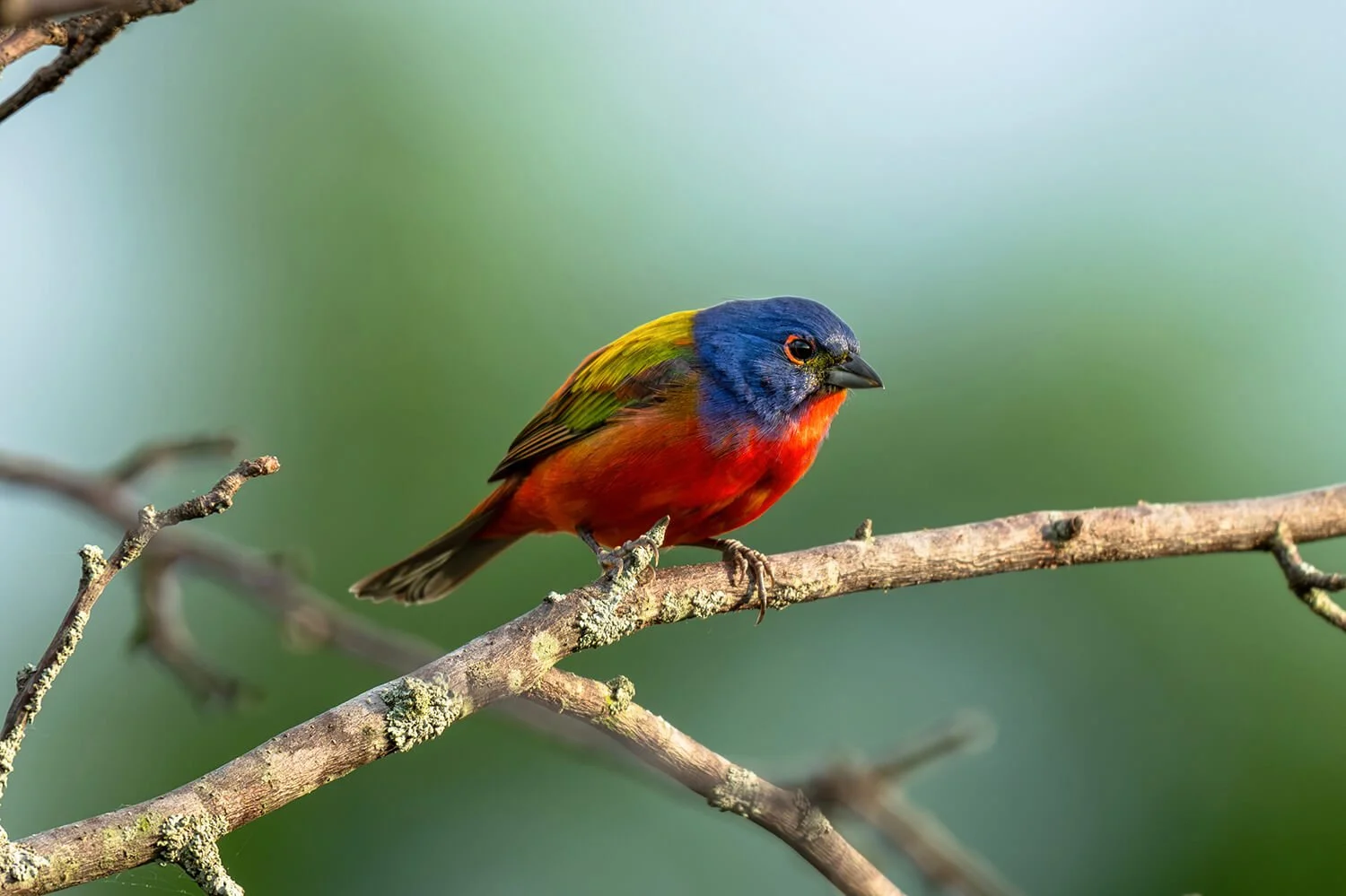
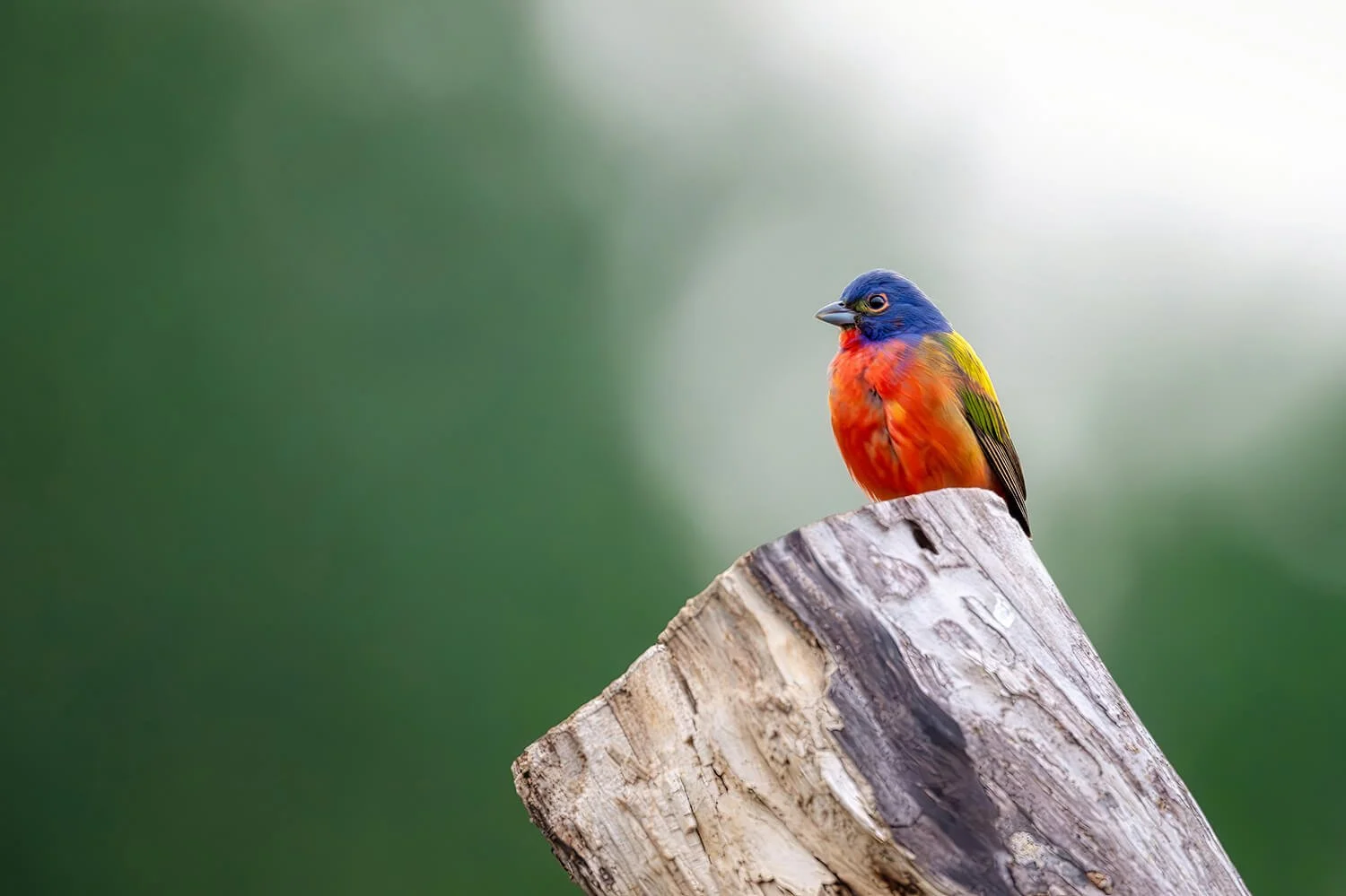
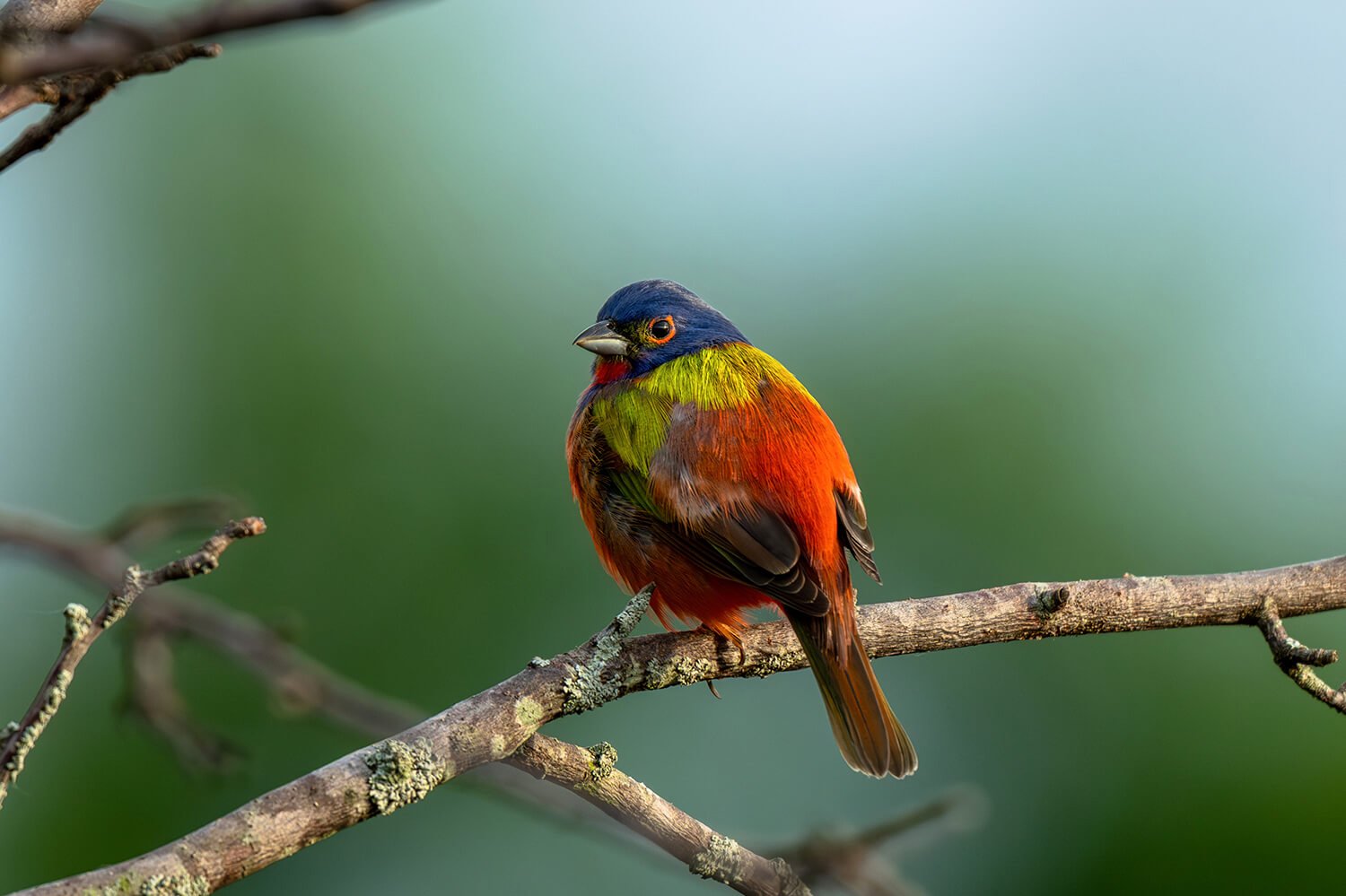
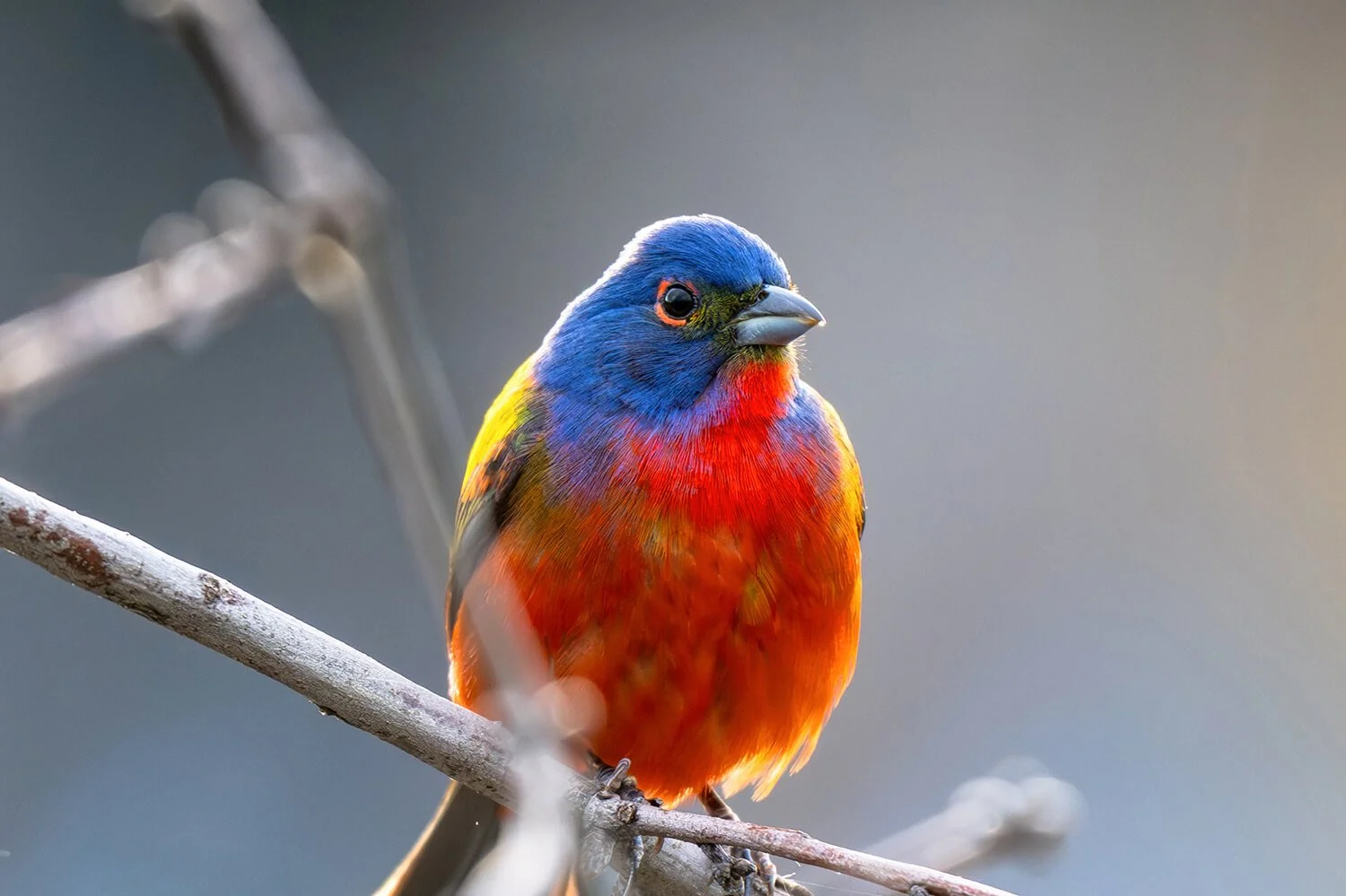
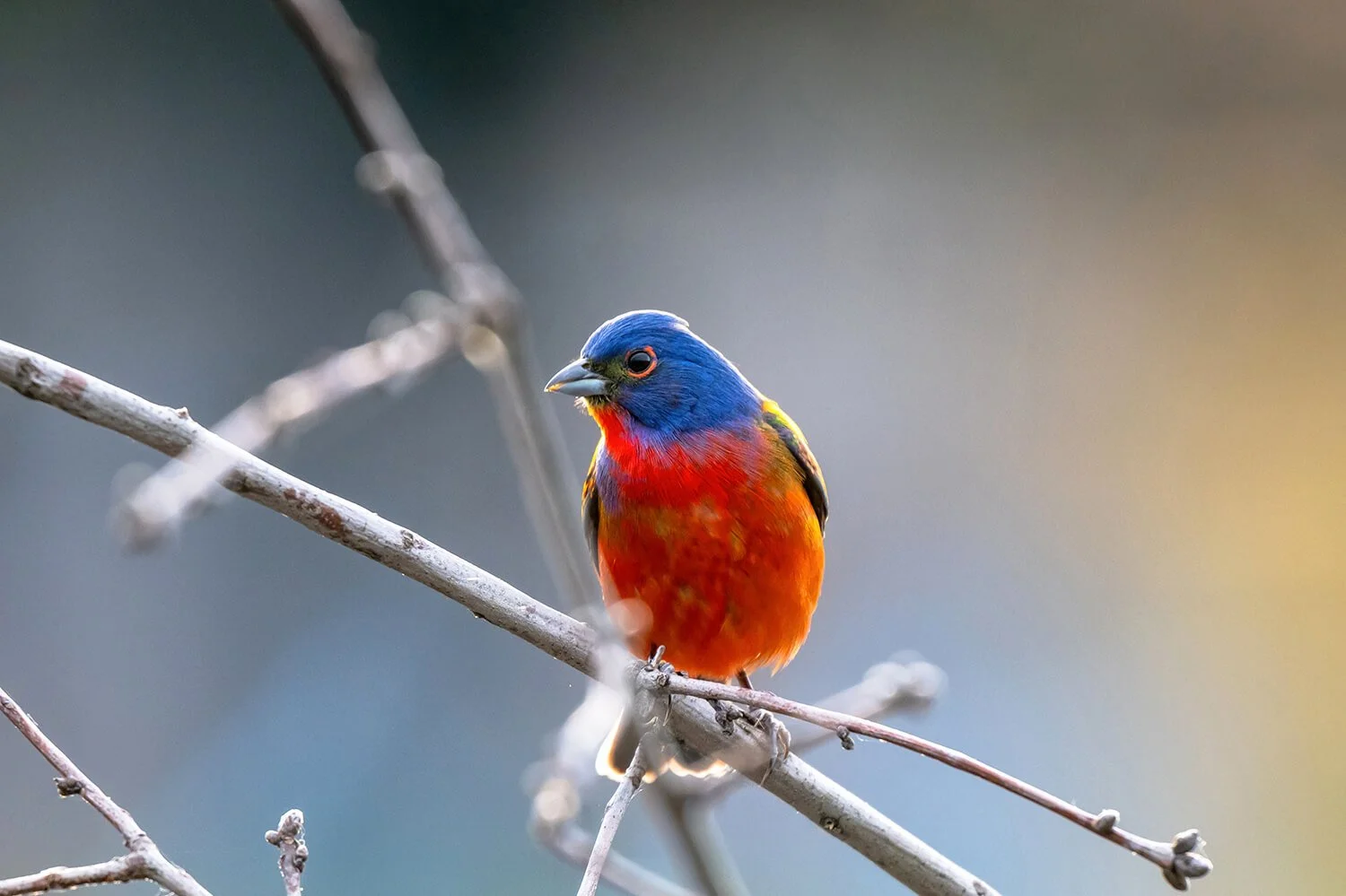
There I was, scrolling through social media feeds, watching everyone else’s dream vacation that I couldn’t take, when I saw a post of a bird. It was a multicolored songbird with intense blue, red, green, and yellow colors.
I had never seen this bird before and assumed it lived in a tropical destination like Costa Rica, which I dream of escaping to.
Then came a long-overdue pleasant shock: the photo was taken at Dorothea Dix Park (Dix Park) in Raleigh, North Carolina, roughly 30 minutes from my home in Chapel Hill. How could this be?
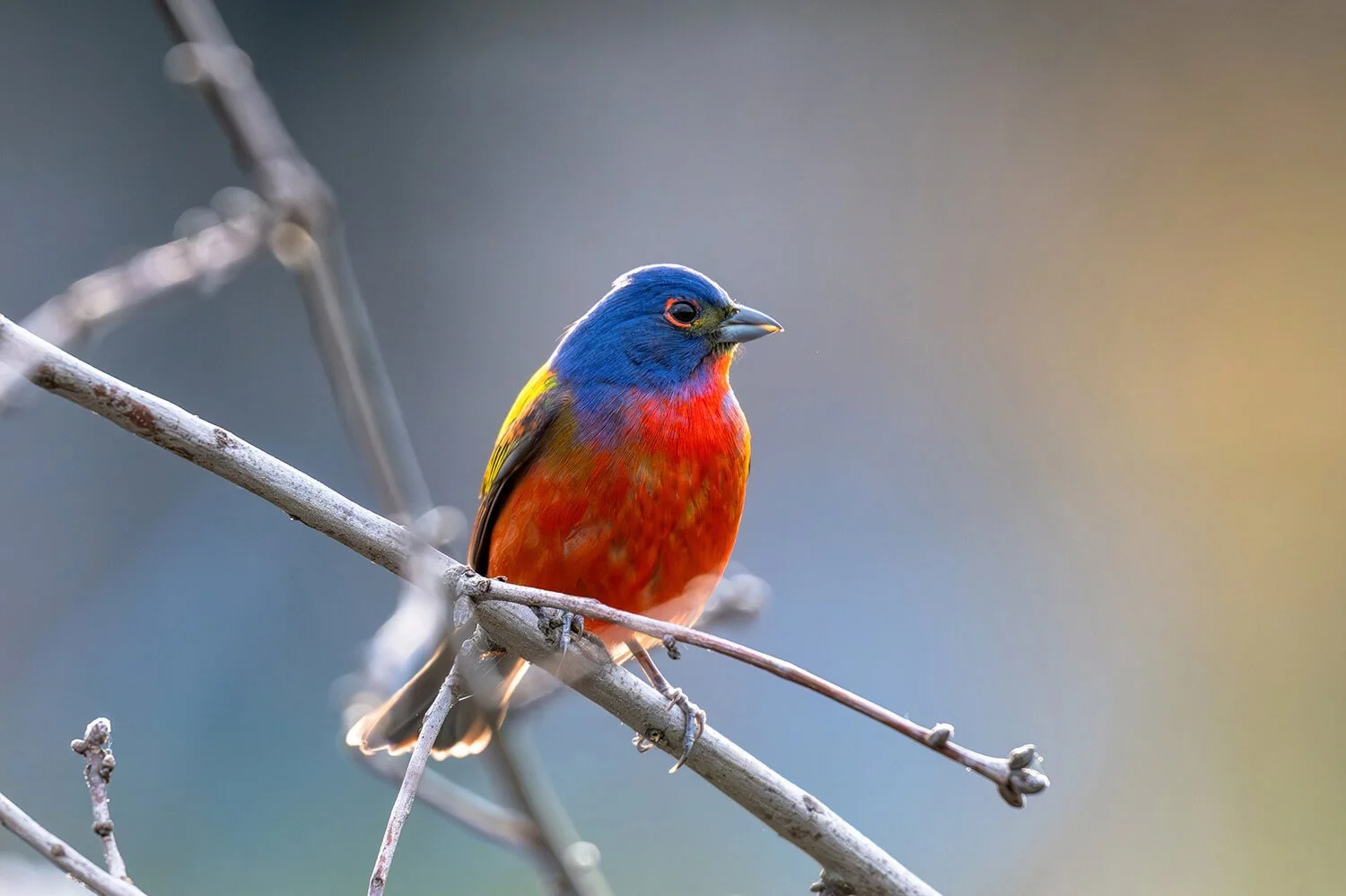
A little social media sleuthing and a quick Google search gave me the story. The bird was a male Painted Bunting, a rare find in the Triangle but not uncommon in our state, more typically seen along the southeastern coastline.
This Painted Bunting showed up in 2022 and has been returning each spring since.
My First Birding Adventure
The following Sunday, I packed my Nikon Z8 with the Nikon Z 180–600mm lens attached and left Chapel Hill, arriving at Dix Park just after sunrise. Social media posts had provided some direction: at the gravel lot just below the sunflower fields is a large brush pile.
Approaching this dense mass of tangled, scraggly tree brush to look for a bird that resembles a work of Picasso seemed odd. The short walk from the parking lot was filled with anticipation. As I got closer, I noticed the silhouette of a bird perched on some stray branches poking out of the pile.
As I raised my lens and drew focus, much to my delight, there was the Painted Bunting. I could not believe my eyes. My overexcitement resulted in a flurry of poorly composed shots before I settled down.
Then this marvelous bird broke into song. I was treated to a 2-minute solo performance before he flew off into the tree line.
This outing was the beginning of my birding journey, which, as for many birders, borders on obsession—albeit the positive kind.
Birding Community Encounters
Walking away from the brush pile, I encountered another photographer. After exchanging introductions, I shared my story. For the next hour, we searched for the Painted Bunting, encountering many other birds along the way.
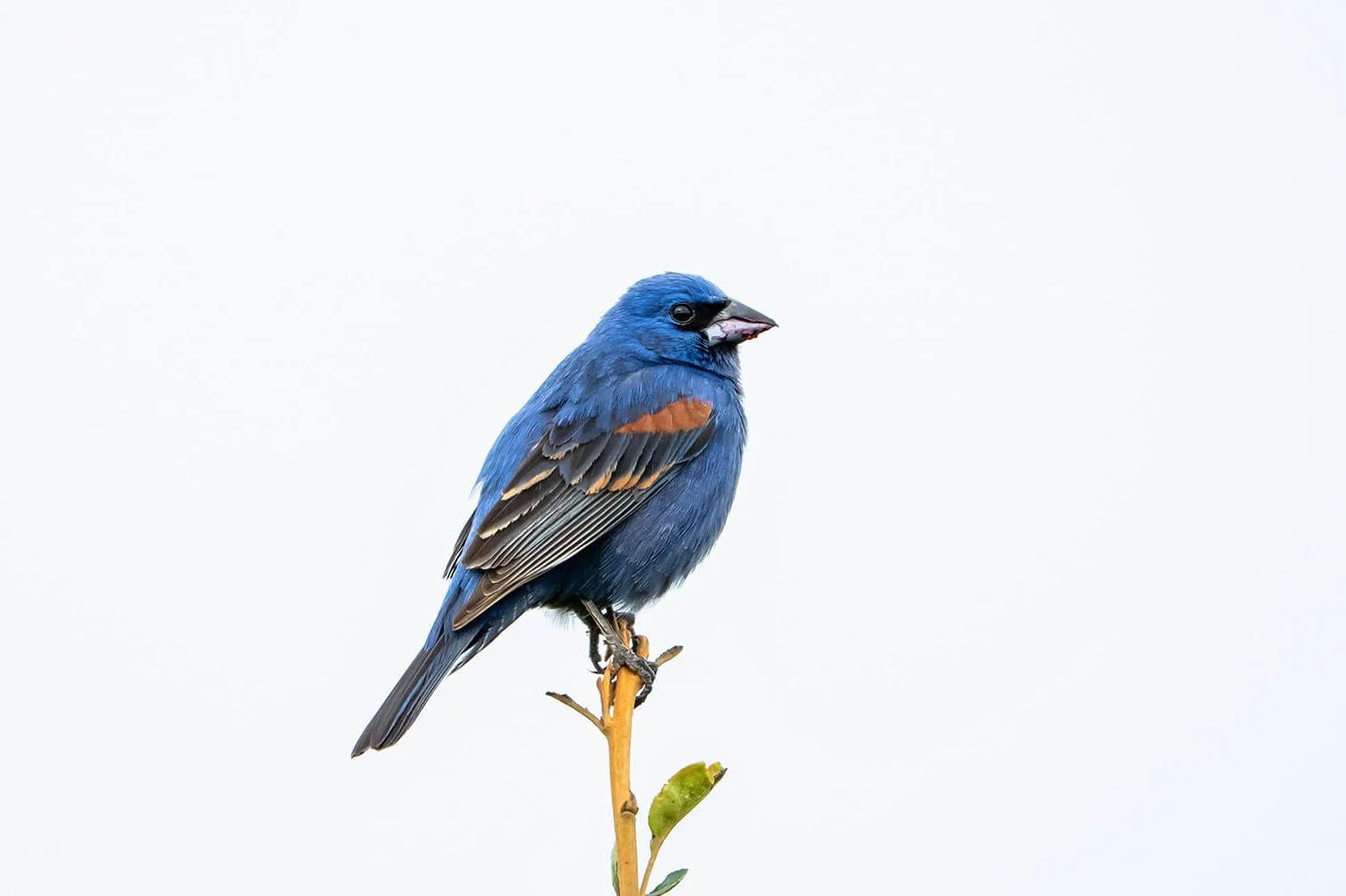
A male Blue Grosbeak, a stunning, deep royal blue songbird with distinctive rusty-brown wing bars, black wings and tail, and a tiny black mask around its eyes.
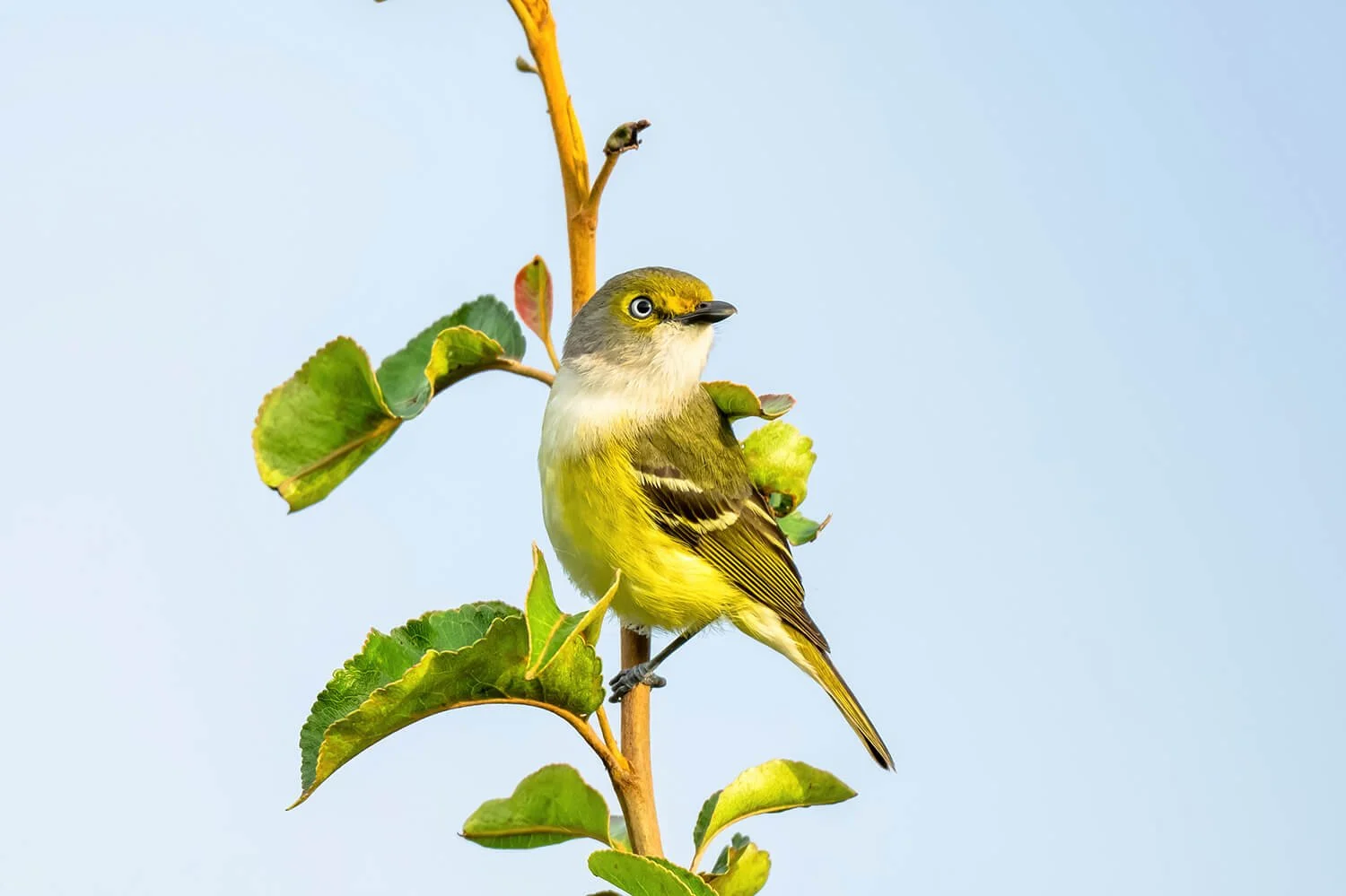
There was the White-eyed Vireo, a small songbird with a gray head, olive-green back, white throat and chest, bright yellow spectacles surrounding its namesake white eyes, yellow-washed sides, and white wing bars.
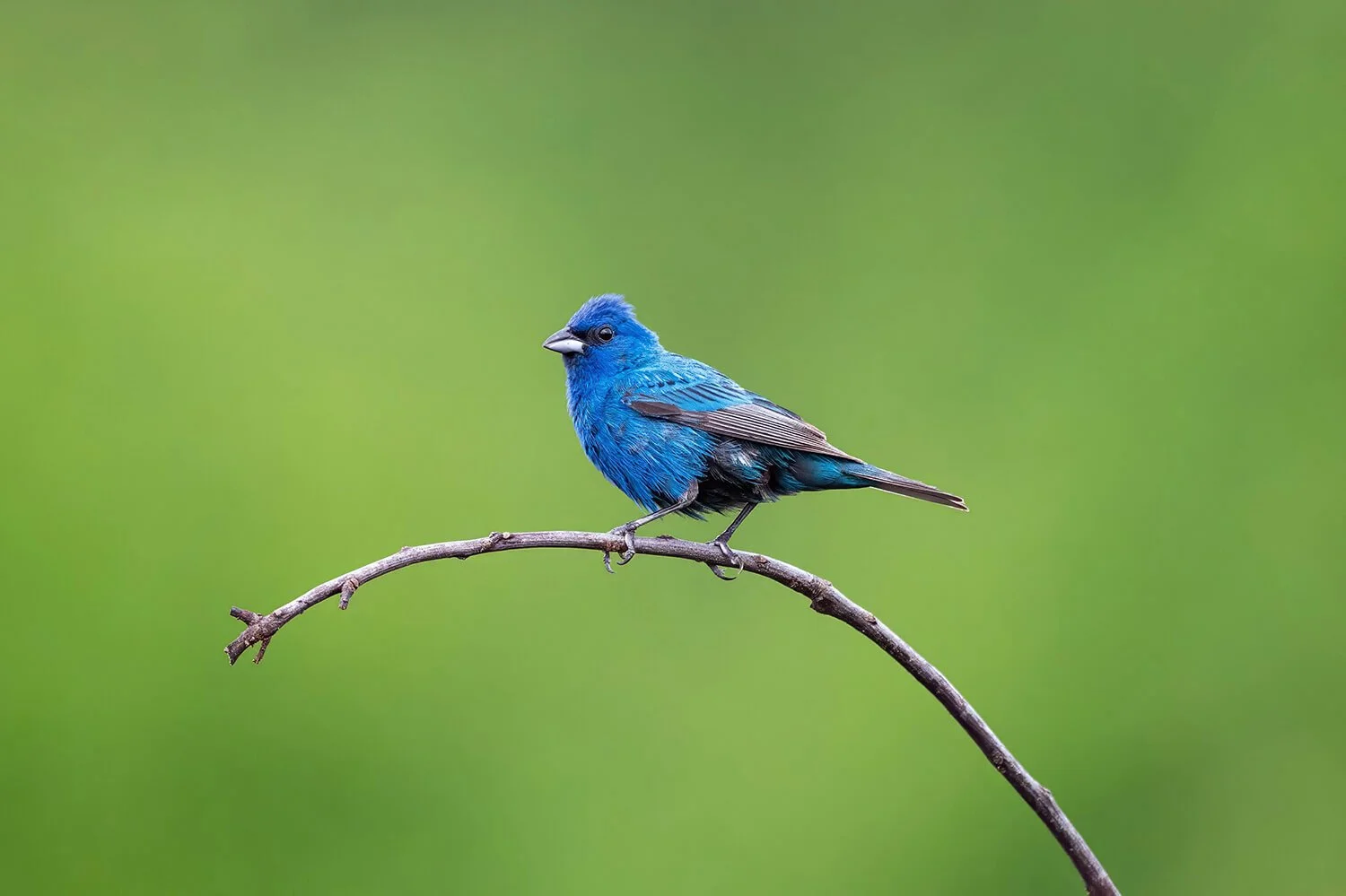
Then came a male Indigo Bunting, a sparrow-sized, seed-eating bird that sings with gusto and has a vibrant blue body that can appear turquoise in sunlight or dark blue/blackish in the shade.
(I only learned these names further into my birding journey.)
The Healing Power of a Morning Outdoors
As I drove home, I reflected on the morning. The last three hours had felt like only thirty minutes. I hadn’t thought about anything else. I had experienced visual and auditory immersion, unlike anything on a computer screen or a smartphone.
I had also interacted with someone I had never met, yet the exchange felt like we were longtime friends. No negative comments, no disputes over current controversies—just talk of birds, camera gear, and the shots we didn’t get.
This experience is a window into the joys of birding.
Exploring Local Birding Spots
Over the next couple of years, I began making weekly visits to local parks, lakes, waterfowl impoundments, and preserves—places like:
• Sandy Creek Park
• Jordan Lake State Recreation Area (Ebenezer Church Access)
• Flat River Waterfowl Impoundment
• Brumley Nature Preserve, North
As time went on, I met more people and even ran into people I already knew who enjoyed birding.
The birding community is diverse, friendly, and incredibly welcoming. Some people I see often; others, less frequently; sometimes I don’t see anybody at all. Informal, unplanned meetings can turn into group walks.
There are no commitments or fees. You can go as often or as little as you want. It’s genuinely a great pastime.
There are different levels and directions of interest, too. Some casual birders walk and enjoy what they see. Some serious birders know all the names, species, and songs/calls. There are casual photographers, enthusiasts, and pro-enthusiasts—many people are a combination of the three.
It’s not uncommon for a group of photographers to follow a serious birder who listens to vocalizations and points out birds, much like a tour guide.
I was surprised by how many birds I didn’t know lived in my area. With each outing, I encountered species I had never seen before. Others taught me about migratory patterns and songs/calls, and I used the internet to expand on that knowledge.
As I progress in my birding journey and try to tune my ear, I am continually impressed by those who can call out a bird vocalization in the middle of a conversation and then lead the charge to find it.
Bird Photography: What Gear Do You Need?
For serious birding, a 400mm camera and lens are a good starting point. More skittish birds will require something in the 500–600mm range.
My Go-To Setup
• Nikon Z8
• Nikon Z 180–600mm f/5.6–6.3 VR
The 180–600mm lens provides a more versatile setup, while the 800mm is a specialty lens that is more challenging to use. If I had to keep only one, it would be the 180–600mm.
Realistic Expectations for Birding
Nature is unpredictable. I don’t go out every weekend and come back with 30 stunning images. There are plenty of outings when I come back without taking a single picture. It can be challenging to capture a bird isolated on a single branch with a nice background—and then add good light to that equation.
“Life is a journey, not a destination.”
The same can be said for birding. Even when I arrive home with no great photos, I still feel refreshed. Getting out for a walk, enjoying the fresh air, and immersing myself in nature is a much-needed break from our fast-paced, overstimulated daily lives.
Birding reduces stress and anxiety while offering social connections with no strings attached. It’s an excellent way to improve your overall sense of well-being and help restore balance to your life.
Ready to Start Your Own Birding Journey?
Whether you have a camera or not, or have ever been birding or not, if you have transportation and can walk, you’re already halfway there.
Do an internet search for some of the best birding spots near you and visit the closest one.
Walk, look, listen, and enjoy—you will feel better!
I only recommend equipment that’s proven itself through early mornings, challenging weather, and my tendency to wander off trail for “just one more shot.”
Thanks for helping support what I do.