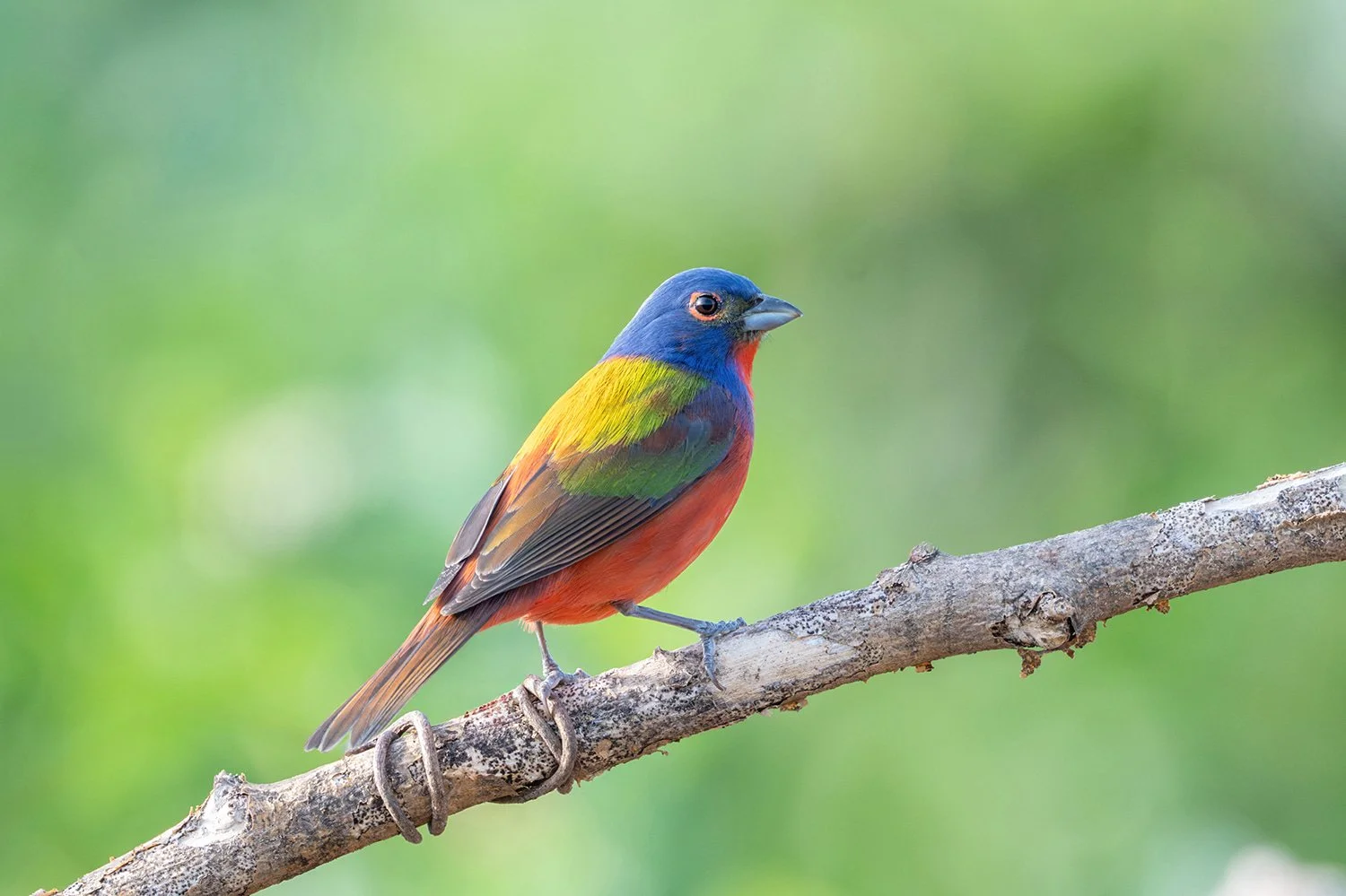
Picasso, the Painted Bunting of Dix Park in Raleigh, North Carolina, sits on a limb protruding from a brush pile.
Every spring, birders, photographers, and nature lovers begin asking the same question:
"Has Picasso returned?"
If you spend any time around Dorothea Dix Park in Raleigh during the breeding season, you'll quickly discover they're not talking about the famous artist. They're talking about a brilliantly colored Painted Bunting that has become something of a local celebrity.
Since first appearing in the spring of 2022, this remarkable little bird has delighted thousands of visitors and earned a reputation that stretches well beyond the Triangle. Birders drive from across North Carolina—and neighboring states—hoping for a chance to see him. Photographers arrive before sunrise with cameras and tripods. Families bring their children. Casual walkers often leave wondering how one tiny bird could attract such a crowd.
The answer is simple.
Once you see Picasso, you'll understand.
What Is a Painted Bunting?
Often called one of North America's most beautiful birds, the male Painted Bunting hardly looks real. With brilliant blue, lime green, bright yellow, and vibrant red plumage, he resembles a flying watercolor painting more than a songbird.
Painted Buntings belong to the Cardinal family, but unlike their familiar red cousins, they're surprisingly difficult to find. In North Carolina, they're most commonly found along the southeastern coastal plain. Seeing one in the Triangle—especially in Raleigh—is unusual enough to get birders talking.
Seeing the same bird return year after year?
That's something truly special.
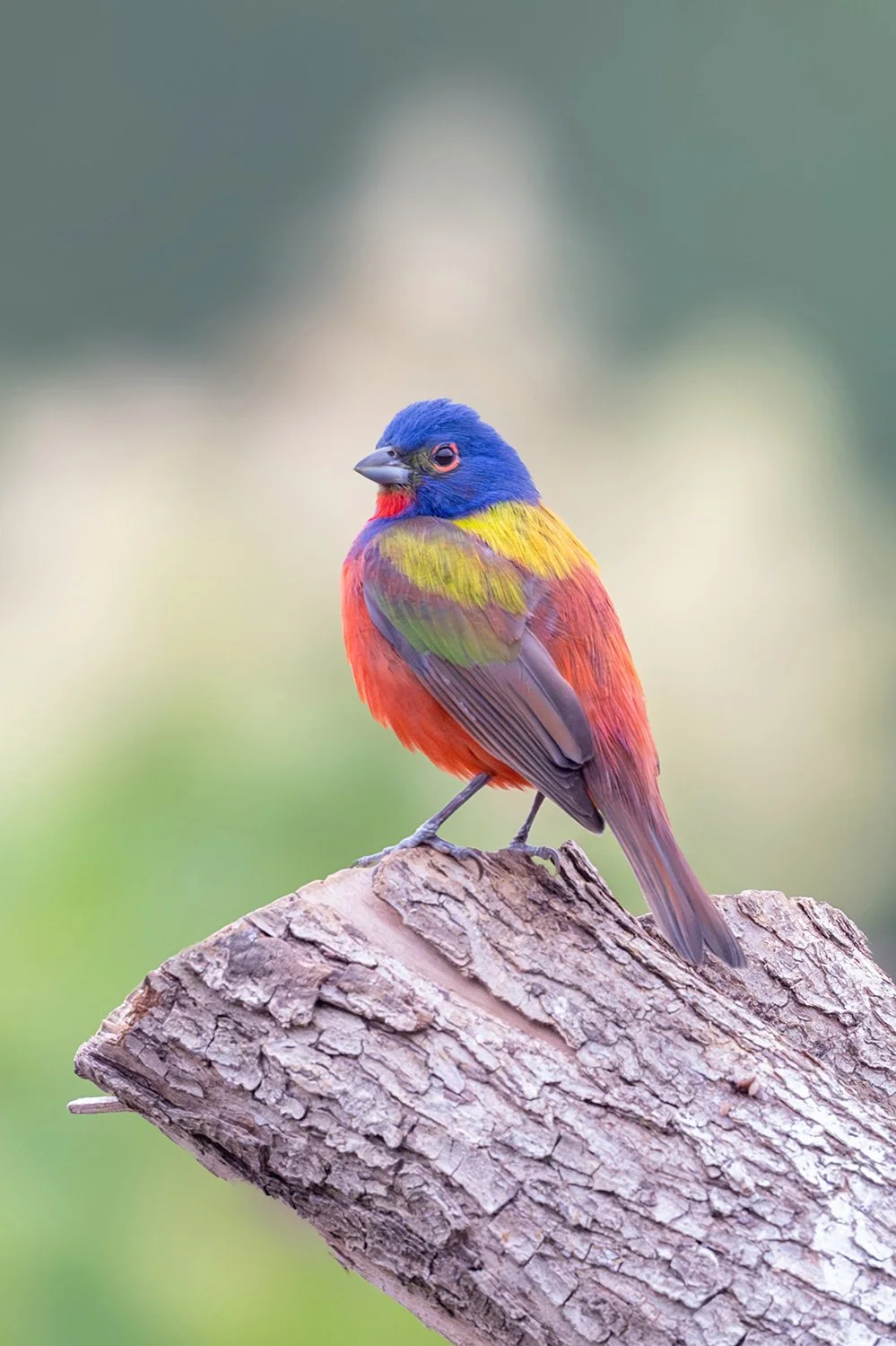
Painted Bunting "Picasso" perched on a stump at Dorothea Dix Park in Raleigh, North Carolina.
From Rare Visitor to Local Legend
When this Painted Bunting first appeared at Dorothea Dix Park in 2022, word spread quickly through local birding groups.
Then it spread even farther.
Before long, visitors were driving two or even three hours just for the chance to catch a glimpse of him. Local television stations featured stories about Raleigh's unexpected visitor. Social media filled with photographs and videos. Every spring, excitement builds as people wait to see whether he'll make another appearance.
Fortunately, he has.
And each return has only added to the legend.
One of the most enjoyable things about visiting Dix Park is watching newcomers arrive. They often ask the same question:
"Where's the Painted Bunting?"
The answer is usually accompanied by a smile.
"Just follow the crowd."
If you see a small group of photographers quietly looking toward the treetops—or standing around a brush pile with cameras pointed in the same direction—there's a good chance you've found Picasso.
How Picasso Got His Name
For several years, he was simply known as the Painted Bunting at Dix Park.
Then someone made a suggestion that immediately felt right.
"We should call him Picasso."
With his dazzling mix of blue, green, yellow, and red feathers, the comparison was perfect. The name spread quickly through the local birding community, and before long everyone seemed to be calling him Picasso.
Seeing how much joy this bird brought to people, I started a Facebook group dedicated to sharing photographs, updates, and sightings. It didn't take long before the name became part of the community's vocabulary.
Today, if someone mentions "Picasso" in local birding circles, everyone knows exactly which bird they're talking about.
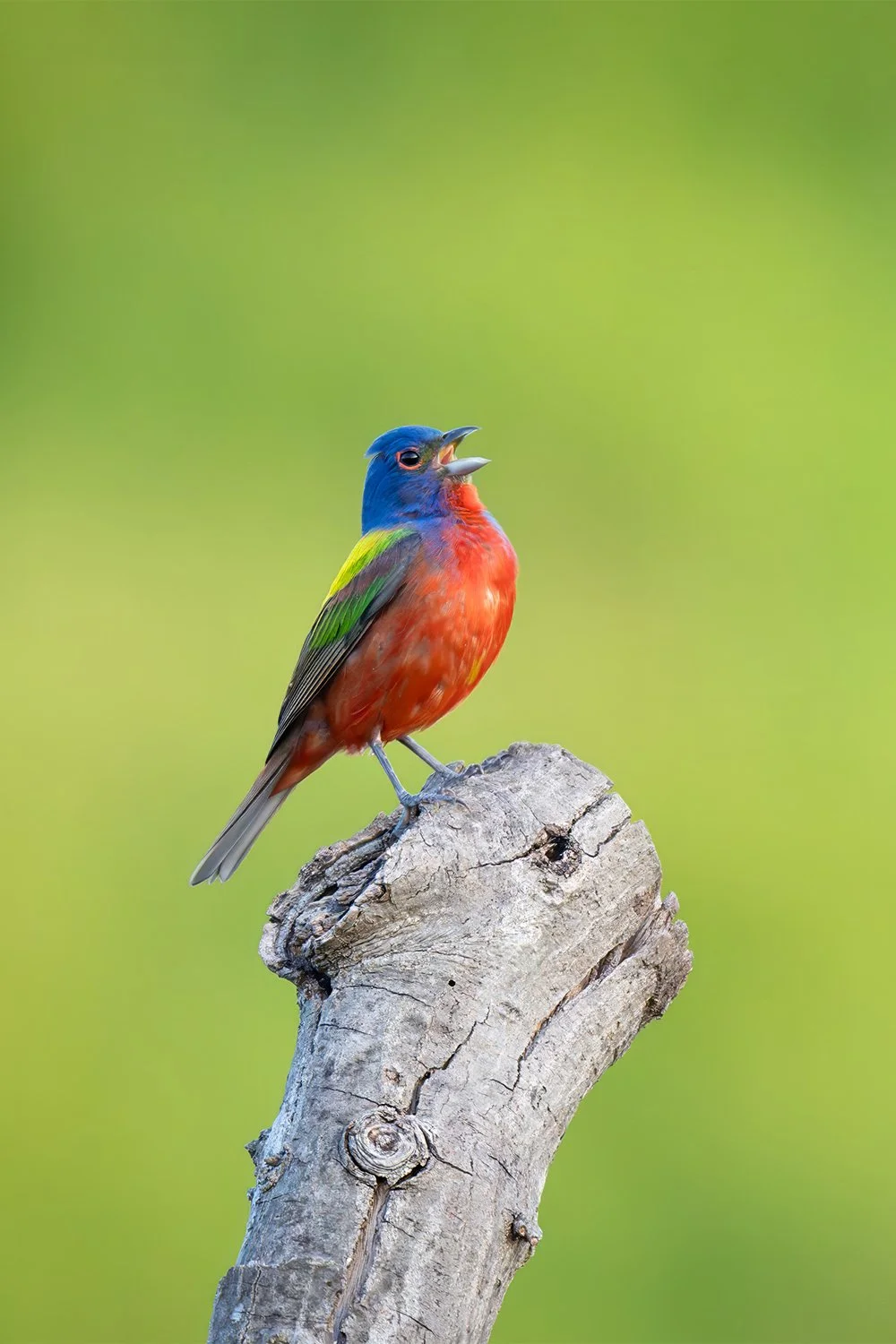
Picasso sings from a favorite perch during the breeding season at Dix Park in Raleigh.
Why So Many People Love Picasso
Beautiful birds aren't rare.
Beautiful birds that welcome an audience are.
Part of Picasso's charm is his remarkable tolerance for people.
Unlike many Painted Buntings that disappear into dense vegetation the moment they notice human activity, Picasso has become surprisingly comfortable with respectful observers. It's not unusual to find him singing from a perch only 10 or 15 feet away while photographers quietly gather below.
Sometimes he'll perch high in a favorite treetop and sing for several minutes. Other times he'll settle onto a low shrub or the edge of a brush pile, seemingly unconcerned by the small crowd admiring him.
One photographer I met from South Carolina summed it up perfectly.
"When we find them back home, they usually fly off before you can get a good look."
Picasso often does the opposite.
At times, it almost feels like he's putting on a performance.
Whether that's actually true or not, it certainly feels that way to everyone watching.
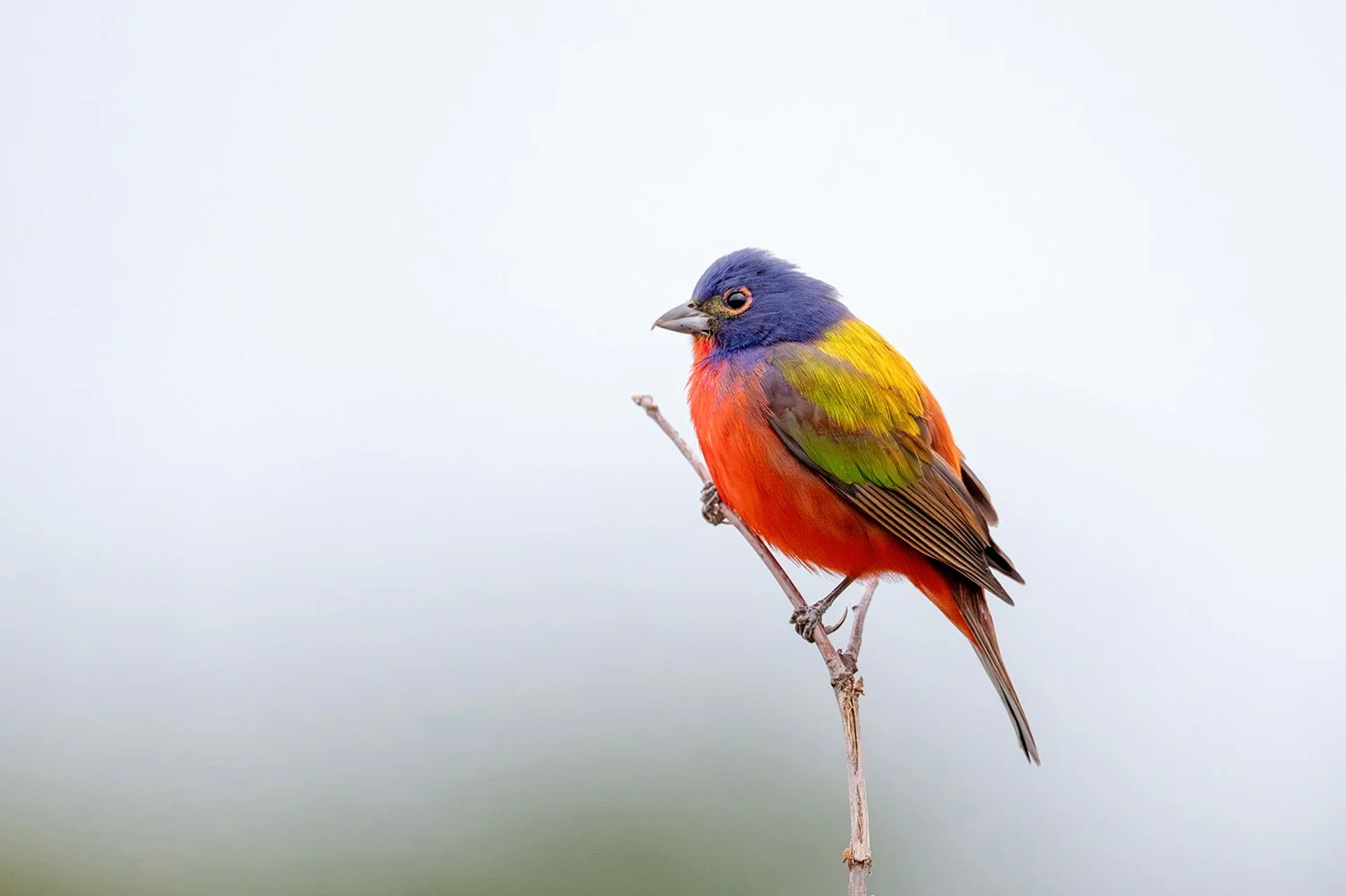
A puffed-up Picasso shows off his colorful plumage at Dix Park in Raleigh, North Carolina.
More Than a Bird
Over the past four seasons, Picasso has become much more than a rare bird.
He's become an experience.
Complete strangers strike up conversations while waiting for him to appear. Experienced birders help first-time visitors spot him. Children get excited when they see colors they never imagined could exist on a bird. Photographers compare images, share tips, and celebrate each other's favorite captures.
It's a reminder that nature has a remarkable way of bringing people together.
One of the reasons Picasso has become so popular is how accessible he is. Dix Park offers convenient parking, and the walk to his favorite area is relatively short, making the experience enjoyable for visitors of nearly every age.
You don't need to hike several miles into the wilderness.
You don't need specialized birding knowledge.
You simply need a little patience—and perhaps a little luck.
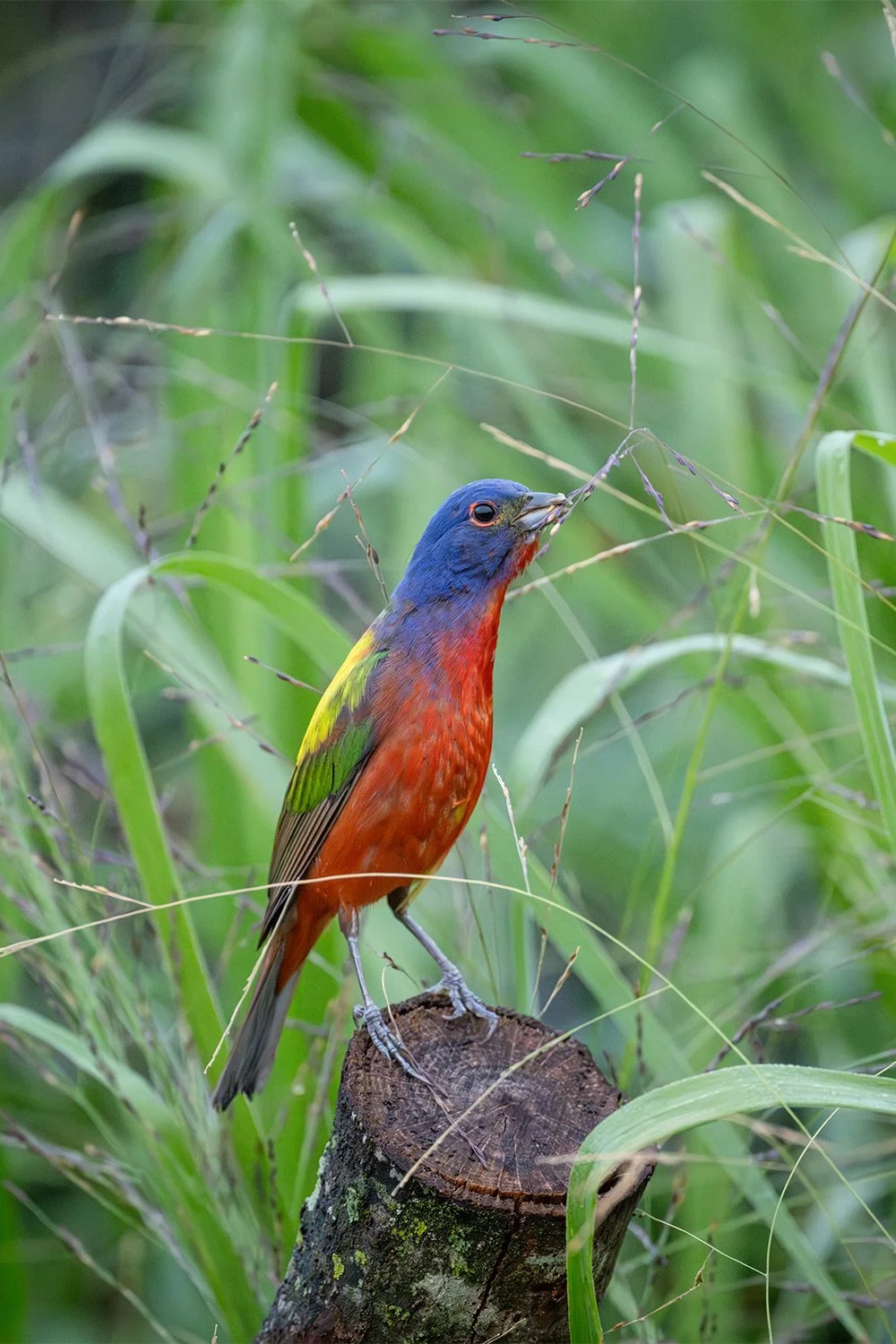
Picasso feeds on grass seeds, a common food source for Painted Buntings in North Carolina.
You Don't Need an Expensive Camera
One of the biggest misconceptions I hear is that you need thousands of dollars' worth of camera equipment to enjoy Picasso.
You don't.
Many visitors capture wonderful photos and videos with nothing more than their smartphones. Others simply stand quietly and enjoy listening to his cheerful song echo across the park.
If bird photography becomes your next hobby, that's wonderful.
But don't let the lack of a large camera keep you from experiencing one of Raleigh's most remarkable seasonal visitors.
The memory is worth far more than the photograph.
If you're interested in the photography side of things, visit my previous blog where I discuss the camera gear, lenses, settings, and techniques I use to photograph Picasso and other North Carolina birds.
A Little Bird That Brings People Together
Every community has its landmarks.
Every now and then, it gets a legend.
For thousands of people across North Carolina, Picasso has become exactly that—a tiny ambassador for nature who reminds us to slow down, look up, and appreciate the extraordinary things that sometimes appear in the most unexpected places.
If you visit Dorothea Dix Park during the breeding season, I hope you're fortunate enough to hear him sing.
And if you happen to see a small crowd smiling while looking into the trees...
You'll know you've found Picasso.
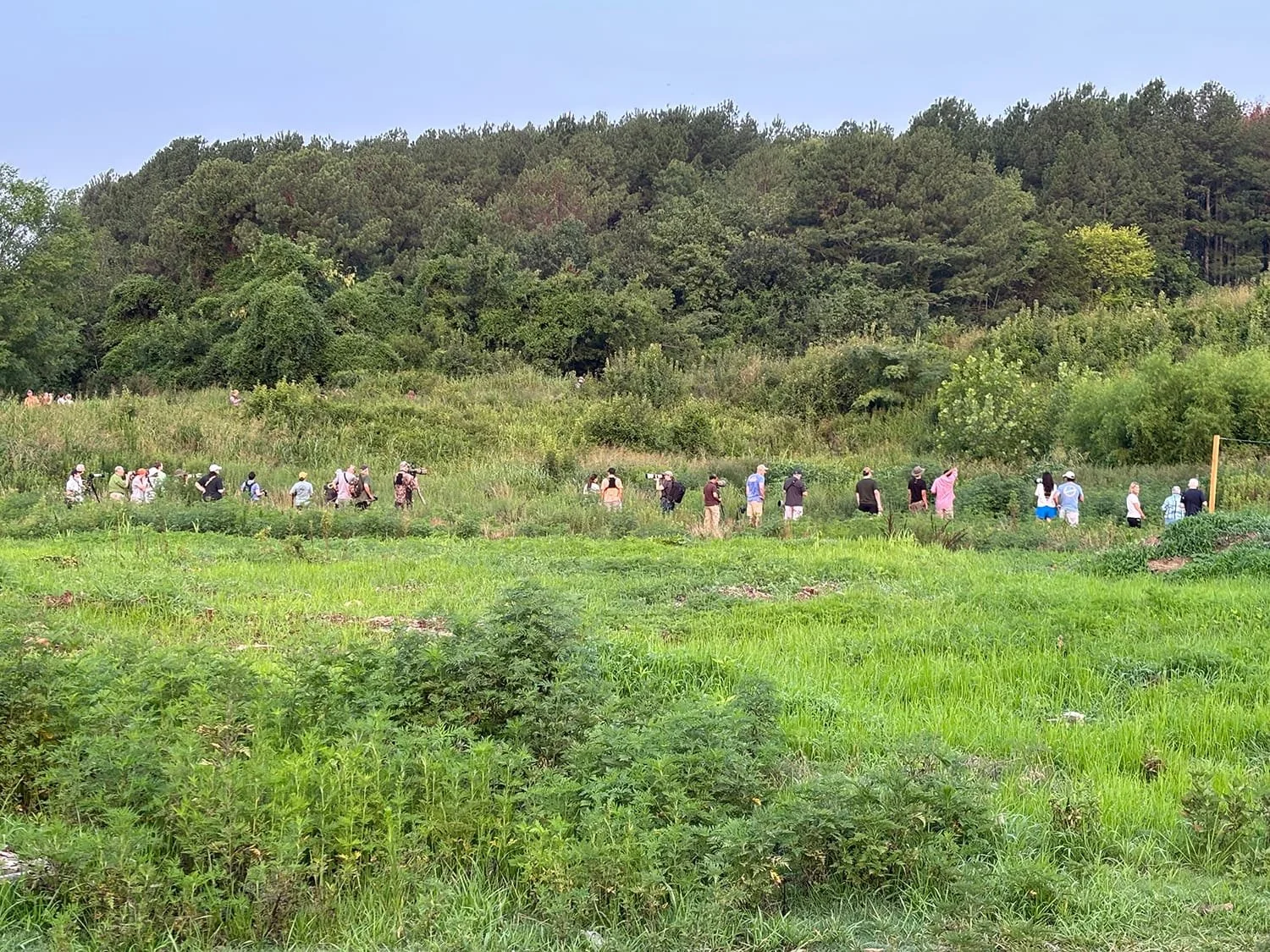
Birders, photographers, and nature lovers gather at Dorothea Dix Park in Raleigh, hoping to catch a glimpse of Picasso, the famous Painted Bunting.